
Are EU ports ready for alternative fuels?

November 10, 2022
08:30 hrs.
» UTC/GMT +2
Share this event
LinkedIn
Twitter
WhatsApp
Facebook
More events

The ENGIMMONIA Project and SEANERGY Project, both co-funded by EU, are joining forces for an exclusive event where to present different relevant decarbonization experiences from EU ports and where to have the chance to interact (in dedicated interactive sessions) with other ports and maritime stakeholders towards the identification of opportunities and barriers towards the promotion of alternative fuels in EU Ports.
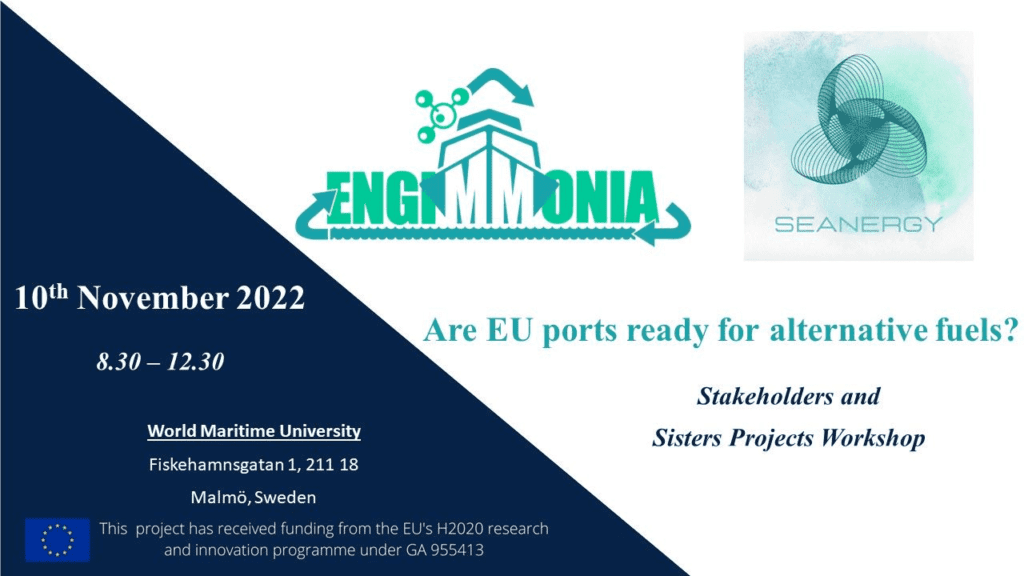
Are EU ports ready for alternative fuels?

Are you curious to hear about the European Commission’s programmes in place to accelerate the energy transition of sea transport and ports? Would you like to see different experiences about EU ports that are already lighthouses in EU ports’ decarbonization?

Please, register both if you are attending in person or remotely.

Media & Coverage

World Maritime University hosted the first SEANERGY Project Workshop in Sweden. After presenting the project’s scopes and challenges they tried to reply to the following question: “ARE EU PORTS READY FOR ALTERNATIVE FUELS?”.

Thank you to the WMU team for organizing this successful event:

News

Ecoport Meeting Showcases SEANERGY’s Sustainable Vision

On December 12th, the Port Authority of Valencia hosted the Ecoport biannual meeting, gathering around 20 stakeholders from various organizations within the Port of Valencia community. The meeting provided an opportunity to share updates and insights into ongoing projects aimed at fostering sustainability in the maritime sector.

Train-the-end-users event description (in Spain, Greece and the Pan-EU event)

The Train the End Users Event took place on March 21th in Αthens, with DAFNI as a host, and online with participants from all over the world. The hybrid training event brought together EU and international port stakeholders, as well as students and young professionals in the field of port decarbonization. Participants received practical guidance on how to apply these tools to their specific port contexts and were invited to share their feedback and suggestions to help improve the content and usability of the SEANERGY materials.