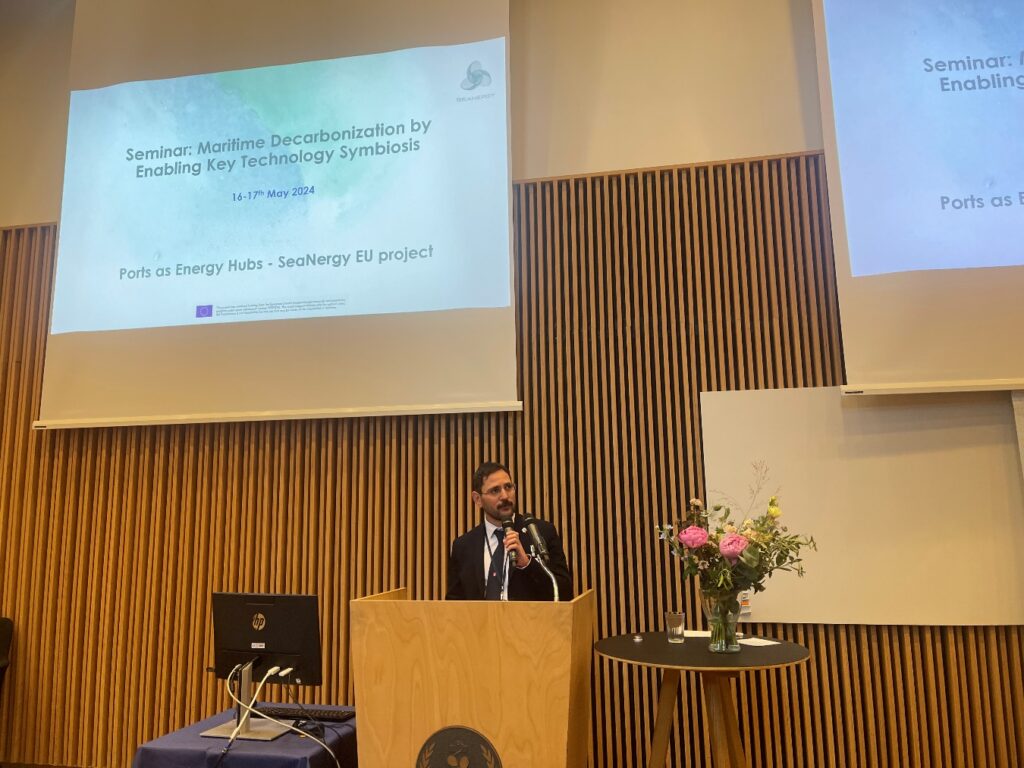
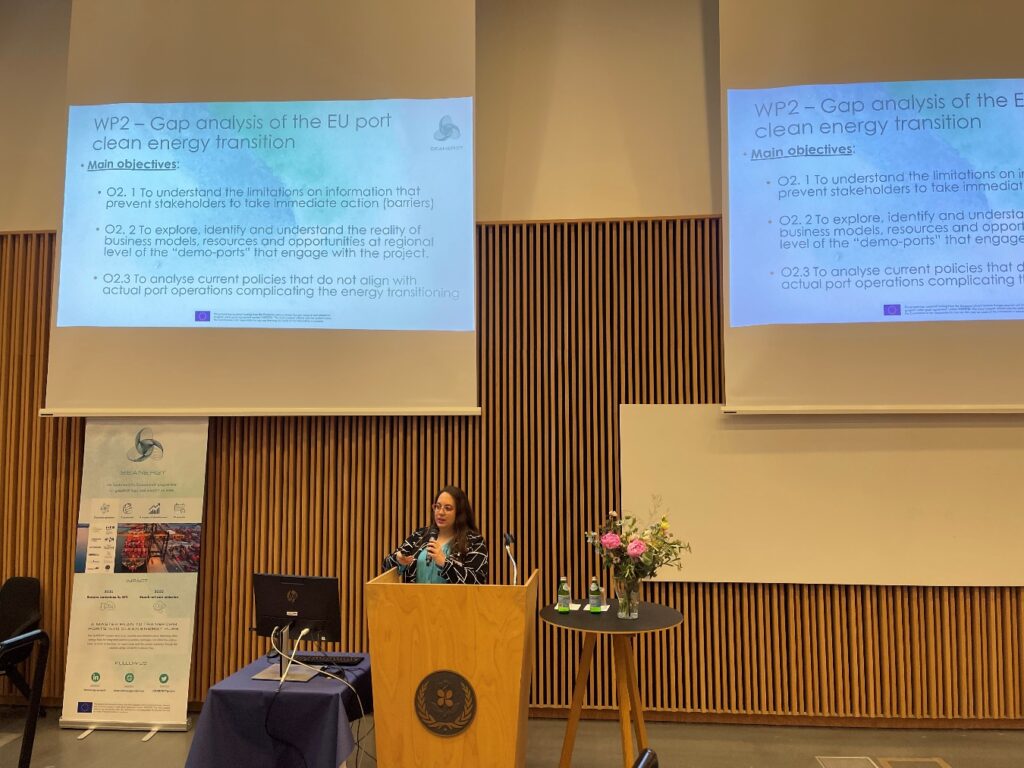
In the framework of the seminar “Maritime Decarbonization by Enabling Key Technology Symbiosis,” held on May 16-17, 2024, at the World Maritime University (in Malmo), the SEANERGY project proudly presented the “Ports as Energy Hubs” session. This session featured several impactful presentations that focused on innovative strategies for the decarbonization of ports.
The event was honored to host a diverse group of speakers from both our project partners and other esteemed institutions. Their valuable perspectives and initiatives are crucial as we work towards a sustainable future in maritime operations.
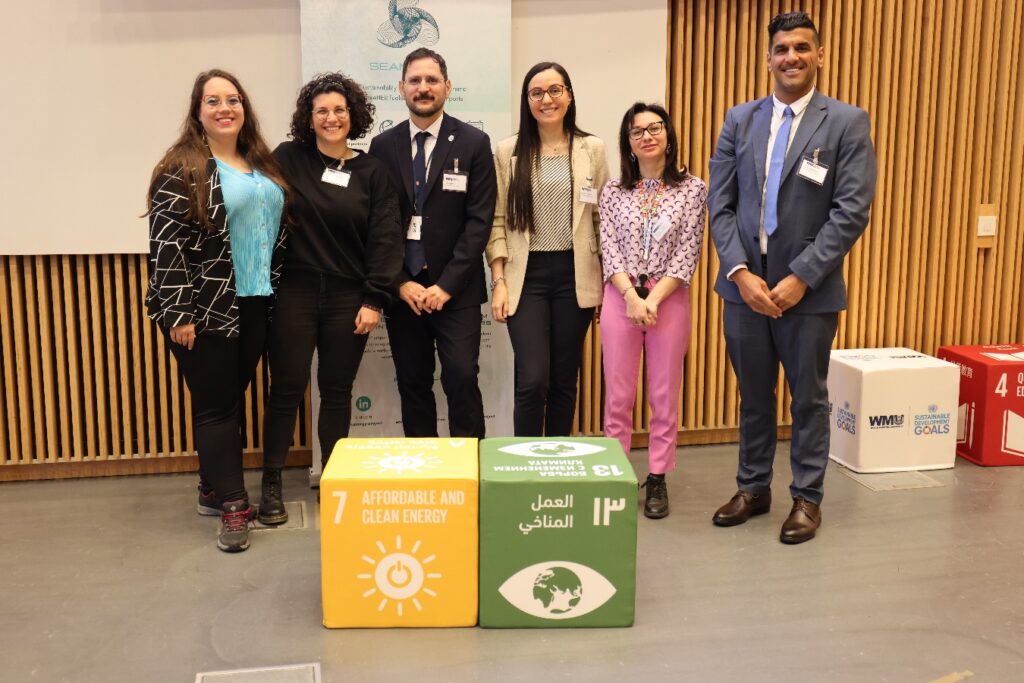
Special Thanks to the Distinguished Speakers:
- Elena Gascon from Atperson
- Mustafa Aydin from the European Environment Agency
- Louise Brix-Hansen from the Mærsk Mc-Kinney Møller Center for Zero Carbon Shipping
- Malthe Mulvad from Copenhagen Malmö Port
- Jennie Folkunger from the Port of Trelleborg
- Hannah Mosmans from the MAGPIE project
- Wouter Schmidt from the PIONEERS project
- Bogdan Oldakowski from the Baltic Ports Organization
- Fabio Ballini from the World Maritime University
- Anas Alamoush from the World Maritime University
Their collaboration and innovative ideas are instrumental as we navigate towards a sustainable future in maritime operations.
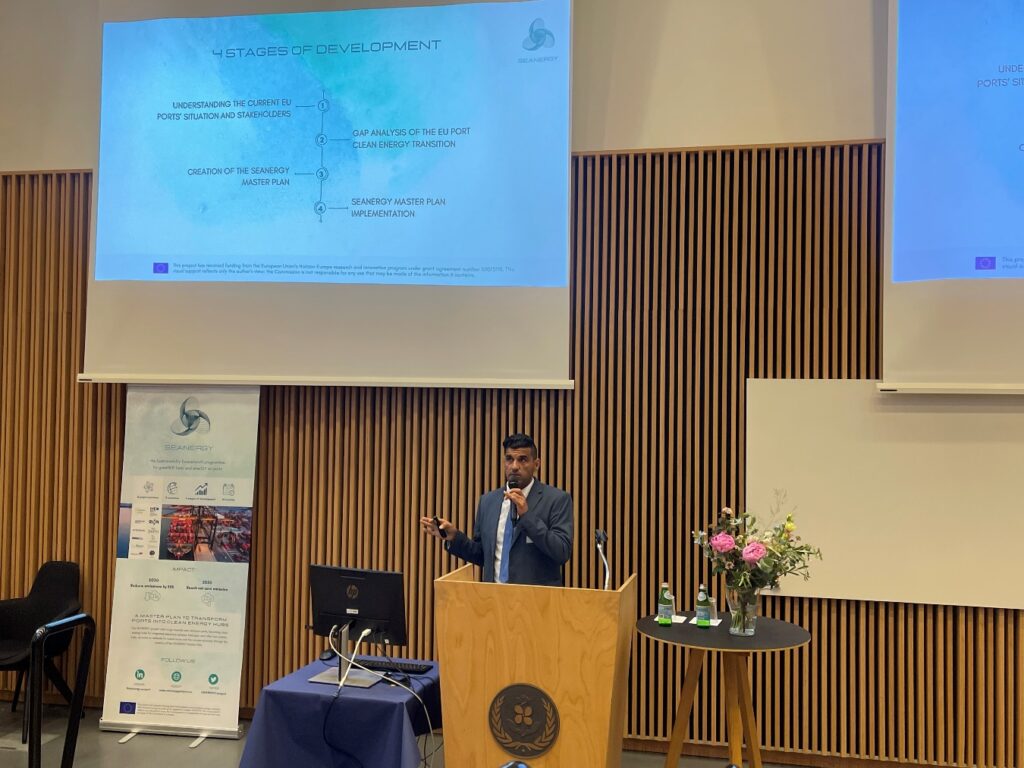
For more information about the SEANERGY Project, please visit our website.